




by Jake Cline
Patti Smith started thinking about her life story before she'd even lived it. "I believed I could write the longest book in the world, record the events of every single day," she writes of a childhood dream in Bread of Angels, her latest memoir. "I would write it all down in such a way that everyone would find something of themselves. Some might stay with me, others take wing."
That "such a way" became, in fact, one of Smith's lifelong pursuits and a hallmark of her writing. Smith, who will turn 80 on December 30, has been publishing books since the early 1970s. Her initial output included limited-run, self-published chapbooks and small-press poetry collections, written while she was scratching out an existence in New York and shortly before she began a music career that would lead to a global audience and her induction in the Rock & Roll Hall of Fame. Smith revisited those prefame, starving-artist years in Just Kids, her sublime 2010 memoir about her relationship with photographer Robert Mapplethorpe. Just Kids won that year's National Book Award for nonfiction and established Smith as one of the United States' most essential memoirists.
Smith followed Just Kids with two memoirs that incorporate fictional passages narrated by what she describes as a "vagabond version of myself": 2015's M Train and 2019's Year of the Monkey. Her next book, The Melting, will continue in that vein, as it reworks a serialized story Smith published during the pandemic on Substack.
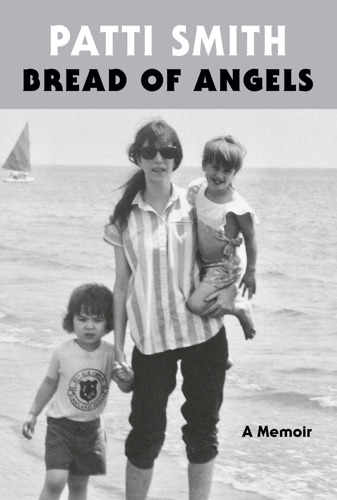
Bread of Angels is a more traditional memoir than those books, in that it finds Smith recounting her life from birth through the present day. She shares her recollections of being a sickly, daydreaming child whose family moved 11 times before her fifth birthday and her experiences as a world-touring (and sometimes -weary) rock star and author. Smith has called Bread of Angels the "sister" to Just Kids' "brother," and the book offers careful depictions of and warm tributes to her parents, siblings and late husband, the musician Fred "Sonic" Smith.
Bread of Angels, like its predecessors, is filled with loss, the ineluctable trade-off in a well-lived life. Smith's expressions of grief hit hard, but her books' main source of power is love: of family, friends, art and life itself.
That idea was reaffirmed during my recent phone conversation with Smith, who spoke from her home in New York in advance of the October 9 performance of An Evening of Songs and Stories With Patti Smith at the Arsht. Regrouping after a cross-country tour of promotional book events and concerts with her band—including a raved-about appearance at Riot Fest in Chicago—and recovering from a shingles infection, Smith discussed childhood memories; her popular Substack and Instagram accounts; her landmark debut album, Horses, which turned 50 last year; her withdrawal from public life in 1979; and why it is difficult for her to write about her husband, who died in 1994 at 46 years old. The following exchange has been edited for length and clarity.
In Bread of Angels, your recollections, going all the way back to your childhood, are quite vivid. After having written several memoirs, beginning with Just Kids, how close does the past feel to you?
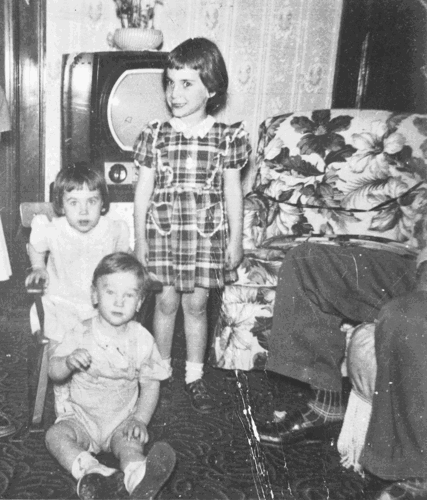
I think the reason my childhood and my early life with Robert are so vivid is because they are a collective memory. My brother, sister and I were very close. We were born in rapid succession after World War II, a little around a year apart. One of the things we liked to do as we got older and when we got together was to recount our childhood. We loved reliving it. Each of us had a specific, very vivid memory of one particular incident, and we shared these. In the book, all the childhood memories are my own, but they're my own magnified by the collective memory of my brother and sister.
The same with Robert. Robert and I, when we were young, we loved to recap. He loved for me to tell him what he called "our story." Especially when we had no money, he'd say, "Well, we can't go anywhere, so tell me our story." And then, I would start, "Well, there was a girl. She was 20. She had a plaid suitcase. She got on the bus to go to New York City." And then, I would tell how we met. So it was quite vivid in my mind when I set out to write [Just Kids].
Memories come and go, but I feel like they're always within a few feet. I can grasp them in the air. But as I'm approaching 80 at the end of the year, I feel the necessity to document certain memories, especially when I want to remember certain people in my life. And that was one of the reasons I wanted to write Bread of Angels. It wasn't so much to talk about myself, but to show some gratitude and introduce people in more depth to my parents, my brother and my work process and how I'm building new memories. The book was supposed to be very simple. I wanted it to be almost all focused on childhood, and it just went its own way. I'm glad it did.
Did you feel pressure or a strong sense of responsibility because you were writing about people you love so much?
Well, it's not pressure. I don't really feel pressure, because [Bread of Angels] was by my own design—I'm writing it. I felt more pressure writing Robert's book [Just Kids], because he asked me to write it, and I had never written nonfiction, and I vowed that I would write it. I felt I had to do it. With this book, I decided I wanted to do it. I think, as you said, it was more about responsibility, making sure that I had presented everyone not only in their best light, but in a light that was worthy of writing about. I wasn't going to write about all the difficulties my mother and I had when I was young, because we evolved from it. As I got older, I just felt in awe of her and everything she accomplished and all her sacrifices. This book really was an exercise in gratitude.
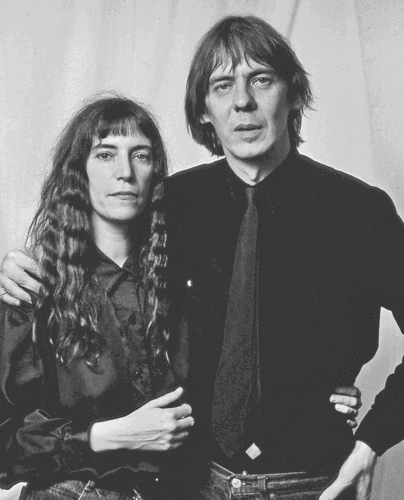
The most difficult part was writing about my husband, because I wanted people to get a sense of him, his beauty as a man and how much we all loved him. He was such a private person that I had to find just the right words and the right way to give Fred to people but also to make certain that certain aspects were left as his own.
You have said that you initially didn't want to write another memoir, but did so in part because of inaccurate and false stories that have been published about you and Fred.
People really resented that I just left public life without a farewell tour or a word. I thought it was ridiculous to do a farewell tour. I made a decision about what I wanted to do with my work and my life, and I upheld it. And also a lot of people felt—and this has been since the '80s that things were written, just sometimes very cruel things—they felt that I had become some kind of domesticated cow or that I betrayed my punk-rock promises. I've always considered myself an artist, and an artist, no matter what your field, has to be ever evolving. There were unauthorized biographies that made speculation about Fred's behavior or [claimed] Fred had a difficult childhood. Well, that's true, but he didn't make our children's life difficult. He was a beautiful father.
Some people thought I was in Detroit doing nothing and maybe taking drugs all day or whatever. I've never had a drug problem. I've never at all—ever, never—had an abuse problem. And to think that a person like me would be doing nothing just proves that they knew nothing of me, because I'm incapable of doing nothing. I'm a worker. In the 16 years I was out of public, I was writing every day, studying, evolving, raising children—no small task. And just evolving as a human being. In that period of my life, I learned more about our world. Fred was very political. I learned more about the state of the world. I learned more about myself. I feel I became a writer in that period because I wrote. I had a daily practice: I wrote every day. I feel very grateful for those years.
Speaking of gratitude, one of the pleasures for me—and I'm sure for many people—of reading your books is to learn what movies, artists and music you're enthusiastic about.
I get so excited and enthralled by the books that I read that I always want to share them. Right now, I'm rereading Graham Greene, and I feel like I could be on a megaphone reminding people what a brilliant writer he was. I'm just so grateful for, and always have been, for the work that people do, whether it's de Kooning or Jackson Pollock or Rembrandt or Hermann Hesse. I'm so grateful that they produce this work and that we're privy to it.
You consider sharing works and artists that inspire you to be part of your job.
It's what I do on my Substack, what I do on my Instagram. I will introduce a book or reintroduce a book or someone who I feel should be recognized. It's what I did with A Book of Days during the pandemic. It's 365 pictures and captions, but a lot of those are books I want to share, some very obscure. Some are people who did remarkable things: scientists, mathematicians, everybody from Alice Ball to Mary Shelley. I like to do that. Yeah, I feel in a way it's my job.
You've said that you don't consider yourself an analytical reader, and in Bread of Angels, you write that as a student you "had more presumptive goals than speculating what this poem or that song was about." How does that factor into your writing of a book like Bread of Angels?
I'm not a real complex writer. There are poetic aspects, and I think the reader might have to deal with a lot of references, but they can easily look up [Japanese novelist Yukio] Mishima if they don't know who Mishima is. I've never really thought about how difficult or easy it is for the reader. I'm not a heavily descriptive writer like Faulkner or somebody. I always think of my writing as quite simple. The other books, like Year of the Monkey, which is 60 percent fiction, are like autofiction. People have to just go along with it, go with the flow. In M Train, Year of the Monkey and this book I'm writing now, you just take a little journey with the narrator, who's like a vagabond version of myself.
The more difficult work would be my poetry. I know that my poetry is more difficult because it's code. I've always believed that poetry is a form of code and the most difficult of all the arts to get through. I mean, it took me decades to be able to say, "I understand A Season in Hell backwards and forwards." I have a sense completely of "Desolation Row," but I don't burden myself nor am I presumptuous enough to say, "Well, Bob Dylan meant this when he said that." I move with the language.
I know that some of my poems can be challenging. They're even challenging for me sometimes years later, because there's a lot of personal slang in my older poems. But when you break them down, 50 percent of them are love poems. It's a mix of being inspired by someone, my own imagination, the language that I was enveloped in at the time. Was I reading a lot of William Burroughs or was I reading a lot of French poetry? Or was I influenced by listening to Jimi Hendrix or Coltrane? It's all going to be in there. But in the end, it's my own.
In Bread of Angels, you write about the recording of Horses and the inspiration behind its songs and lyrics. "Gloria" is a song that I'm sure you've been asked about a million times. [Its famous opening line—"Jesus died for somebody's sins but not mine"—received fresh attention online this summer after Smith met with Pope Leo XIV at the Vatican.] You write that the song was "an answer to those attempting to corner me, or demand self-identification." Because, as you said, it can take years to fully understand a Rimbaud poem, has it been frustrating for you when people say, "Well, this lyric is about that or this song is about that. That's what she meant"?
No. I've gotten over that. It used to bug me when I was younger. Because people, the things they project sometimes, they would make me laugh. Sometimes, they'd be annoying. But I just figure—unless it's something cruel—people should be allowed to see where their imagination takes them. I sometimes find it amazing that people find all of that in this little sentence or in this little song. But it's also the fact that people will spend so much time with something you do. That's a good thing. I just wouldn't presume to be able to say what anybody meant. But I will riff on somebody else's work. I've done it. I did it with a Van Morrison song, and I'll riff on somebody else's work because this is my interpretation of their work. My only thing is if they get something really wrong. Like, they think I wrote something to this person when I really wrote it for Fred. I always want to say, "No, no, no. I wrote it for him." Otherwise, I don't police other people's opinions.
One of the scenes I have not been able to stop thinking about in Bread of Angels is when you go to the lighthouse in Edgartown [Massachusetts] and you see a woman trying to take a photo of her daughter, who is about 6 years old, and the daughter won't smile. The mom asks her why, and the girl says, "Because I don't want to be seen in the future with a big smile." It's such an evocative statement. As someone who didn't like having his photo taken as a child, and still doesn't, I keep thinking, "What did she mean by that?"
Me, too. That's why I didn't say anything about it. I just said, "This was her age." But I thought, "Was she sensitive to how bad things were in our world?" Because children know more than we think they do. Or did she just want to look cool when she got older? Or maybe she was unhappy, and she didn't want anybody to think she was happy. I have no idea. And who would want to really speculate on what a child is thinking? That's their private world. But I was moved by it.
And it was like that pinball reference, when all of a sudden you hit the right thing and all the lights go on. It made me think of my own childhood. It made me think of our world. It made me think, "What if you asked a starving child or a child in Gaza who just lost their parents to say, 'Smile!'?" My mind went a hundred different ways.
That brings me back to what you were saying about memory. On your eighth birthday, your family was moving again, and you write that you felt "a nostalgic urgency" and were "lamenting the passing of time." Did you recognize at that moment that you were experiencing nostalgia?
Yes, because I had a sense that nothing would be the same, and it wasn't. Because we lived in these barracks with all these kids, you know, running around in this field. Most of our parents worked. It was after the war. And then, everybody was going their separate ways. I could feel that, even though I was only 8, things were [going to change]. I didn't want to grow up. I didn't want to be a grownup. I really didn't want to. I just wanted to be a kid forever. I remember that so well, that moment, that I felt like all these things were, once we left there, they were all going to disappear, be gone.
I was leaving my strange talismans behind, the field, everything was torn up. They bulldozed it. It was gone. I went back there with my sister to see if there were any remnants. And not only did they bulldoze it all, they leveled it. So the little hill we went up and the little wall of stone that we had to walk around to get up the hill, there were just all of these things, they were just leveled. There was nothing left of that period, that magic.
You lived in buildings that were slated to be demolished. Did your parents tell you the buildings would be torn down? Were you aware of that?
We were totally aware, because my mother would get the eviction notices. I mean, not just my mother, everybody that lived there, and they'd go, "Here we go, Beverly. What do you think?" And my mother would say, "I don't know. I don't know where we're going to go." I lived my first five years carted from one rooming house to another. We knew what they were all going through, but as children, you just await your marching orders.
They didn't try to hide the demolitions from you?
No, because people were constantly leaving. It was a condemned building, so they knew it was temporary housing. It was for servicemen at first, but then some immigrants stayed there till they got a place to live. But nobody could find a place to live. It was the early '50s. It was very difficult, especially when you were low-income. And a lot of the servicemen like my father were waiting to get an Army loan, which took years for them to process. But we'd all celebrate when there would be a reprieve. It would be six months, and then it was nine months, and then it was three months. It just went on and on and on. Then, finally, we got the [eviction notice] with the red letters and the big red stamp. And that was it.
Did that create a sense of rootlessness in you as an adult?
No. I think I'm just naturally both: I'm rootless and I like having the same place. I like to travel, but I'm like a homing pigeon, too. I always want to come back to this one place. I don't like moving from house to house to house. I like taking off and going to this country or that country or doing this job and then coming back. I don't like moving. I'm both rootless and rooted, I guess you could say.
An Evening of Songs and Stories With Patti Smith, presented by the Adrienne Arsht Center, Books & Books and the Miami Book Fair, will take place 7 p.m. Friday, October 9 in the Ziff Ballet Opera House's Dorothea Green Theater. Each ticket includes a copy of Bread of Angels.
Top: Photo of Patti Smith by Steven Sebring.