




by Jake Cline
How emo was Johannes Brahms? Consider:
• In one four-month period in 1877, the Hamburg, Germany-born composer wrote his Symphony No. 2 in D major and a motet that he claimed, “casts the necessary shadow on the serene symphony.” Brahms drew the motet’s title—“Wherefore is the light given to them that toil?”—from the Book of Job, that paragon of righteous suffering.
• If Brahms found an answer to the motet’s titular question, it was not resolved “in his heart,” according to biographer Jan Swafford, who notes that soon after completing the work, the composer offered a birthday message to a friend’s child that is so dismal as to be hilarious: “The best is not to be born at all.”
• Of the Second Symphony itself, Brahms claimed it was “so melancholy that you can’t stand it. I have never written anything so sad, so minorish: the score must appear with a black border.” Swafford writes that “black border” was Brahms’ idea of a joke, as the work sounds cheery at first listen.
• During this productive, if somewhat gray, period, Brahms was a quarter-century into an obsession with Clara Schumann, a composer who was 13 years his senior and the widow of his onetime friend and mentor Felix Schumann. “To say the least,” Sarah Fritz writes of Brahms in her new Clara Schumann biography, Madame Composer, “he was poor at communicating his feelings, a dizzying hot-and-cold romantic in love with being in love.”
• In 1878, Brahms grew a beard “for the third and definitive time,” Swafford writes. Brahms even fashioned an identity to complement his new facial hair: a sadsack he called Kapellmeister Müller from Braunschweig. Most people saw through the ruse, but an oblivious Beethoven scholar and composer named Gustav Nottebohm once "spent an entire evening in polite conversation" with Herr Müller.
As any truly funny person might tell you, behind every joke is a held breath or a clenched fist. Brahms, for all his romantic dyspepsia, was in fact a funny person, especially when he was preparing to introduce a new work. “I don’t mind telling you that I have written a tiny, tiny piano concerto with a tiny, tiny wisp of a scherzo,” the composer wrote in a July 1881 letter, according to Swafford’s biography.
The punchline, Swafford writes, is that Brahms’ small concerto was actually “the monumental four-movement Second Piano Concerto in B-flat Major, with its giant scherzo.” Swafford argues that the work represents “Brahms at his most masterful” and “turns a lofty, magisterial face to the world.” The piece debuted November 9, 1881, in Budapest, with Brahms at the piano. (The Second Symphony premiered December 30, 1877, in Vienna with a performance by the Vienna Philharmonic.)
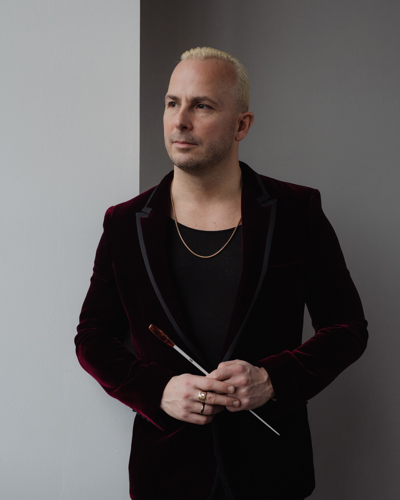
“Brahms is my favorite composer,” conductor Yannick Nézet-Séguin told Arsht Magazine this past February. “He's always been my favorite composer, even when I was a young student. I feel his music is the absolute combination of wonderful, classical perfection, but also a lot of humanity, a lot of emotion. And when I say, ‘humanity, emotion,’ I mean that there are some moments that are really grand and majestic, but others that are very, very intimate.”
On December 8 at the Arsht's Knight Concert Hall, Nézet-Séguin will lead the London-based Chamber Orchestra of Europe through Brahms' Piano Concerto No. 2 and his Symphony No. 2. Italian pianist Beatrice Rana will join the orchestra as a featured performer.
In a moving 2020 essay for The New Yorker, music critic Alex Ross described the effect of listening to Brahms after learning of his mother's death. “I find him the most companionable, the most sympathetic of composers,” Ross wrote. “There is enormous sadness in his work, and yet it is a sadness that glows with understanding, that eases gloom by sharing its own. The music seems in a strange way to be listening to you, even as you listen to it.”
Brahms leaned into such connections when corresponding with his listeners, as Swafford reports he did in one 1879 letter to a fan. "I would have to confess that I am ... a severely melancholic person," Brahms wrote, "that black wings are constantly flapping above us."
The composer was not without mystery. In a detailed dissection of the Second Symphony, Swafford emphasizes the work's tendency to be "vaguely disquieting in its ambiguity" and finds that "Brahms' technique ... is to hide tonal references within the ambiguity, so the revealing of the actual key is a matter of closing in on an implicit presence. ... (He was as expert at hiding key and meter as at hiding himself)."
While that enigmatic quality continues to draw people to Brahms' music and story nearly 130 years after his death, it didn't always benefit his relationships during his lifetime. "Would you believe that in spite of our long and intimate friendship Johannes has never told me anything about what excites or upsets him?" Swafford quotes a teary Clara Schumann telling a guest at Brahms' 47th birthday party. "He is just as much of a riddle, I could almost say as much of a stranger, as he was to me 25 years ago."
The Chamber Orchestra of Europe, featuring conductor Yannick Nézet-Séguin and guest pianist Beatrice Rana, will perform Brahms' Piano Concerto No. 2 and Symphony No. 2 at 7:30 p.m. December 8 in the Knight Concert Hall. The concert opens the Arsht's 2026-27 Classical Music season. Tickets are available here.