



'They said it couldn't be done'
Liz Wallace spent 18 years bringing the world's best artists to Miami. Here's what she learned about the city, audiences and the Arsht.

by Jake Cline
Liz Wallace had been to Florida exactly once, and for only one day, when she accepted an invitation in April 2008 to help organize a programming team at Miami's new performing arts center. At the time, the Adrienne Arsht Center and the city were still trying to figure each other out. Everyone had questions. Who was this massive, two-building complex near Biscayne Bay created for? How can the Arsht's employees and supporters convince residents that the venue is about more than just ballet, classical music and opera? It's in downtown Miami? Who goes to downtown Miami other than club kids and tourists?
Wallace was senior director of artistic planning at the Kennedy Center for the Performing Arts in Washington, D.C., when Lawrence Wilker, then the interim CEO of the Arsht and a former president of the Kennedy Center, asked for her help in Miami. He figured it would take about six months to create a programming department, and Wallace would be under no obligation to stay once it was in place.
"The story is I don't know when to leave a party," Wallace says, "and 18 years later, I'm still here."
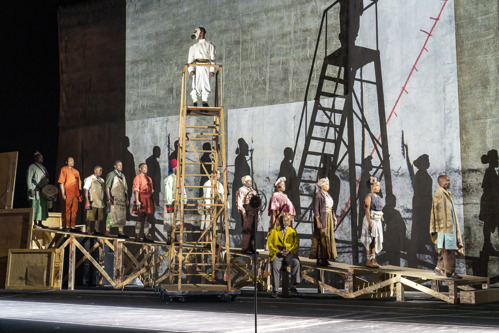
Since becoming the Arsht's vice president of programming, Wallace has overseen the scheduling of nearly 10,000 performances, instituted the long-running Classical Music series, fostered valuable relationships with Miami artists and arts organizations and introduced major international artists to South Florida. Among her most ambitious undertakings were Light/The Holocaust & Humanity Project, a months-long, countywide initiative in 2012 that featured more than 30 organizations focused on combating hate and prejudice, and two multimedia stage shows by acclaimed South African artist William Kentridge, The Head & the Load in 2022 and The Great Yes, The Great No in 2024.
This month, Wallace will leave the Arsht to return to her native Northeast. In a recent interview, she spoke about how Miami, the performing arts and the Arsht have changed over the past 18 years. The following exchange has been edited for length and clarity.
What was your impression of Miami before you came to the Arsht?
I lived in Washington, D.C., for 27 years, and D.C. is very much unto itself. I had always lived in the Northeast, except for high school and college [when] I lived in Wisconsin. My family [was from] Massachusetts. So I was very comfortable in D.C. When I came down to interview for the job here, I couldn't get over the palm trees. I just kept taking photos on my cell phone, sending them to my son, going, "I can't believe this is where I am." And then, I was going over the MacArthur [Causeway] and I realized that it was the Miami Vice bridge. I was like, "Oh, my God." I was just so bowled over by that whole view and the abandoned boats moored. I was fascinated by all of it. Living here was—you know, it's just very different. It took me a long time, and maybe not even, to get it.
As you can imagine, working at the Kennedy Center is very different than working anyplace else, because it is—was—the performing arts center of our nation's capital. We were able to bring performances from all over the globe, and we did, and people wanted to perform there. And it was kind of a different mandate. Miami is a VIP town. Of course, there are a lot of VIPs in Washington, D.C., but it's a different vibe. The appreciation of the arts is a little deeper. And to be fair to Miami, the city didn't have a performing arts center until this century. So, you know, I get it. There are great things that have had a long history here in Miami, but [the Arsht] was a home that they deserved.
By 2008, we had been called "Floriduh" for eight years. No one thought there was culture here, and in the national consciousness, Miami was a superficial town. Did you see that stereotype—whether it is accurate or not—as an obstacle or an opportunity?
Well, both. We needed to remove barriers to entry. And not just financial barriers. There are cultural barriers. We had a time of exploration, and we had a time of experimentation. Every now and again, I look through the files to look at what we did, all the things that we tried. We tried and we failed, or we had a small audience and tried again. Because discovering who wanted to come here was part of it.
In terms of the artists or the audience?
Yes. Big commercial promoters understand the big stuff, because this is a big city. But the other stuff, agents have no idea. They would say, "We don't understand your market. It's all Latin, right?" [My response] was "Miamians listen to everything. It's not that niche."
We focused a lot on the summer. They said it couldn't be done, and we felt that if we did nonverbal or non-language-specific programming, we could get the summer tourists from south of the equator.
Who was saying that summer programming couldn't be done?
The theory was that snowbirds brought their love of performing arts with them, and they wouldn't be here in the heat of the summer. So we wouldn't have that core group of theatergoers. And they're not wrong about certain genres.
Which ones?
Summer is supposed to be lighter fare. You know, no suit and ties going to the theater. So to knock down the barriers to entry, we looked at summer programming as not language-specific and did something like Slava's Snowshow [a Tony Award-nominated performance-art piece about Russian clowns]. We did a lot of experimenting.
How did you feel about that? Did you feel much pressure?
There's always pressure to succeed. The saying goes, "There are no bad artists, just bad deals." We learned quickly that partnering with people for these untried ideas would help. But you need to invest in the community while you're understanding what their appetite is or trying something more than once to say, "Well, maybe you'll like it a second time." Some of it is building an audience. So you've got to try it multiple times, and that's an expensive endeavor.
How much of programming is responding to the community, the people who live here? Because people know what they want, but the Arsht may have something that they don't know they want, right?
I think every performance is a risk. Some have more risk attached than others. If you have a history with the artist—and now, after 20 years, we have history with a lot of artists—one can make better risk assessments. And the sausage side of the business is about the finances of it. I wish I could say this is all about artistic choice and taste and what the community is clamoring for and what is an opportunity for the community to experience. That's how I start. And then, I have to do a budget, and that becomes a whole other situation.
Our halls, both of the big halls, are very special, and we're very lucky to have such wonderful performance venues. It provides an opportunity to do things that other venues cannot.
What are some examples of that?
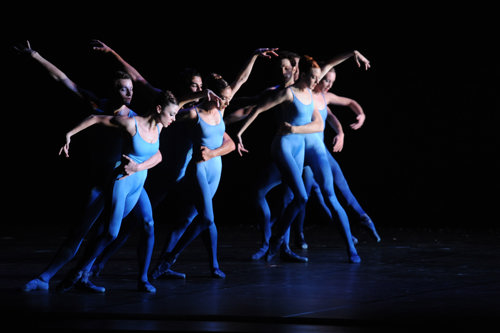
Light/The Holocaust & Humanity Project. It was a three-month community conversation about human rights, which culminated in Ballet Austin presenting the ballet [also titled] Light/The Holocaust & Humanity Project. We worked with the Anti-Defamation League. They did their gala here. We worked with community groups. Zoetic Stage did I Am My Own Wife in that time period. It was a very moving time for all of us. It was really a very important moment for the Arsht to reach out and bring people in. And it's a beautiful ballet.
When you pull off something like that, do you experience a shift in the way you look at Miami or the Arsht? Does it open up your thinking to what you can do next?
Oh, yeah. There's always the what's next. Doing projects like [The Head & the Load], you meet new people in Miami that you haven't met before. You have conversations with them, and it's a great catalyst to expand our reach. But being able to afford to be consistent, that's a luxury.
What is the biggest difference in where the performing arts were in 2008—not just in Miami but in the country—and where they are now?
When I first got here, the Arsht Center was about, "Hey, we're here." We needed to make an impression. We needed to acknowledge the difference in Miami. There are two other performing arts centers up the road. We needed to differentiate ourselves in a good way. Our communities are different. We are not Broward County, and we're not Palm Beach County. We are Miami-Dade County and all that that means. We wanted to be very sensitive to that, to try different things and expose Miami to different things, since there wasn't a big performing arts center here before. We had the ability to do that because there was support for that. Now, the economics are a little different. The choices need to support the ultimate goal of the center. Nationwide, that's the case. Funding for the arts has diminished. So being a good steward, we need to respond to that. Programming is part of that response. It is presenting things so that as many people as can will come.
Is there a genre, whether it's classical, ballet or Broadway, where you've seen the audience grow and maybe become more sophisticated?
The Arsht Center provides opportunities for touring orchestras from all over the world. Maybe the audience is dwindling elsewhere, or they're having a hard time. I'm very happy to say that our classical presentations do very well. We have a loyal audience that is appreciative of the music that we provide for them.
Tell me about your experience with local arts organizations.
Miami has a lot of very talented performing-arts organizations, and we provide space for community organizations to perform. And our arts partners provide performances that we don't. They're not in competition with us. It helps the Center in providing a full complement of programming. Theater Up Close in the studio theater is great. Touring theater of that size is almost unknown. Providing this opportunity for people who live here, that want to perform here, I think it's great. It's a win-win for everybody.
How do you feel about leaving the Arsht?
Oh, it's really mixed. I've been thinking about it for a while. It's a weird thing to contemplate, that you're going to stop something. I've been working in this business, getting a paycheck, for 50 years.
I was doing a cha-cha on the day I was going to talk to [Arsht CEO and president] Johann [Zietsman]. And then, I met with Sam Hyken [of Nu Deco Ensemble], and we were talking about future commissions. Sam always has a project, and I always want a project, and I love talking to Sam. And when he left, it was like, "How could I leave? I mean, what in my life is going to fulfill me like having a creative conversation?" I don't have them every day, but it is what sustains me in this business, and what sustains me in life, to be around creative people. My job is to create a circumstance that they can do what they want to do and what they do best. I'm not a creator. I'm a facilitator. I make opportunity for their ideas to flourish. Because otherwise life is pretty gray. It's very gray without those conversations. So, yeah, it's bittersweet.
Top: Photo of Liz Wallace by Brett Hufziger.