
Adrienne Arsht Center for the Performing Arts of Miami-Dade County presents
The Philadelphia Orchestra
Yannick Nézet-Séguin, Music and Artistic Director and Conductor
Brahms
Symphony No. 3 in F major, Op. 90
I. Allegro con brio
II. Andante
III. Poco allegretto
IV. Allegro—Un poco sostenuto
—Intermission—
Brahms
Symphony No. 4 in E minor, Op. 98
I. Allegro non troppo
II. Andante moderato
III. Allegro giocoso—Poco meno presto—Tempo I
IV. Allegro energico e passionato—Più allegro
Symphony No. 3
Johannes Brahms
Born in Hamburg, May 7, 1833
Died in Vienna, April 3, 1897
The meaning of Johannes Brahms’ Symphony No. 3 in F major has stumped connoisseurs for years. Hans Richter, who conducted the premiere in Vienna on December 2, 1883, called it Brahms’ “Heroic” Symphony because of the big Beethovenian brass opening. Clara Schumann, Brahms’ muse and editor, focused instead on the pastoral qualities, likening it to a forest idyll. Joseph Joachim, Brahms’ virtuoso violin friend, said the final movement represented the myth of Hero and Leander, lovers who meet a tragic end after their light goes out and Leander drowns in a dark sea. Modern scholars have written about the Symphony’s Wagnerian chromaticism, suggesting that the piece is an homage to Brahms’ rival, who had died earlier that year. Some argue that the sweet middle movements represent Brahms’ passion for the soprano Hermine Spies, who was with him in Wiesbaden, Germany, in the summer of 1883 when he composed the work. Even Frank Sinatra found love in the Symphony, co-writing lyrics to the third movement melody for his 1950 hit “Take My Love.”
A clue to the Symphony’s clashes of emotions is found in a letter from the Herzogenbergs, Brahms’ friends who took a special interest in the work’s completion. Their letter, dated October 1, 1883, to the composer reads: “I can’t believe—until I hear it from your own lips—that your enthusiasm for the Niedervald monument is leading you to settle in Wiesbaden for good, in spite of the fact that you are not the composer of ‘Die Wacht am Rhein.’ ” It seems his friends were concerned that Brahms would not return to Vienna because of the political and artistic climate that appeared to favor Dvořák and Liszt. The letter continues, “Is the great Croatian monarchy too much for you, with its leanings to Dvořák rather than to yourself, or—ambition makes me giddy!—do you aspire to the dictatorship of the Wiesbaden Court Orchestra?”
Brahms’ biographer Max Kalbeck first suggested that the last movement of the Third Symphony represented the Niedervald monument, the work mentioned in the Herzogenbergs’ letter. A kind of German Statue of Liberty, the behemoth "Germania" was sculpted by Johannes Schilling beginning in 1871 to celebrate the formation of Germany. It was unveiled in September 1883 to musical fanfare, including four military bands playing the chorale “Nun danket alle Gott” (Now Thank We All Our God). It sits overlooking the Rhine Valley and has inscribed on it the words of the patriotic fight song “Die Wacht am Rhein” (The Guardian of the Rhine).
It is tantalizing to compare the monument to Brahms’ Third Symphony. The work’s four movements stand firmly like "Germania"’s enormous, four-sided platform decorated with four bas-reliefs. Beside the primary figure of "Germania" are two contrasting bronze statues, "War" and "Peace." "War" holds a trumpet in its hand, and those trumpets blaze at the beginning of Brahms’ first movement. What Richter hears as heroic, one can hear as war and Clara’s pastoral as peace. One bas-relief represents the picturesque Rhine and Meune Rivers. A second bas-relief captures the King of Prussia being proclaimed Emperor of Germany—probably what Kalbeck referred to as representing Brahms’ last movement. The two remaining reliefs are scenes of soldiers going to, and returning from, war. In the Third Symphony, we hear conflict and resolution, the final movement quietly concluding in peace and prosperity.
The Symphony enjoyed a triumphant premiere in Vienna and was equally well received in Berlin, with some critics calling it the best thing Brahms had ever produced. He was quite enthusiastic about the work, promising the Herzogenbergs a copy of it: “In about a week, I hope to send you the too, too famous F major, in a two-piano arrangement, from Wiesbaden. The reputation it has acquired makes me want to cancel all my engagements.”
Clara Schumann said in 1884 that “all the movements seem to be of one piece, one beat of a heart,” a monument to a united Germany from one of its most famous expatriates.
A closer look
The shortest of Brahms’ four symphonies, the Third lasts about 35 minutes, brief by late-19th-century orchestral standards. The straightforward and compact movements, however, are saturated with his exhausting syncopations. He chose the limpid key of F major for the outer movements (Allegro con brio and Allegro—Un poco sostenuto), while the middle movements (Andante and Poco allegretto) are in simple C major and curmudgeonly C minor, respectively. He included the motto F—A-flat—F in the opening notes of the first-movement sonata form, making the Symphony “cyclic” because all movements employ that motif. The middle sections are translucent and shimmering. A fiery Finale (Allegro) ensues, which Karl Geiringer called a “tremendous conflict of elemental forces,” before concluding with a calm coda.
— Aaron Beck
Aaron Beck is a professor emeritus of musicology at Lewis & Clark College in Portland, Oregon. He has published widely on the subject of Italian medieval and Renaissance music and art, including his latest book, Boccaccio and the Invention of Musical Narrative.
Brahms composed his Symphony No. 3 in 1883.
The score calls for two flutes, two oboes, two clarinets, three bassoons (III doubling contrabassoon), four horns, two trumpets, three trombones, timpani and strings.
The Symphony runs approximately 35 minutes in performance.
Symphony No. 4
Johannes Brahms
Haydn composed over 100 symphonies, Mozart some 50, but the most celebrated 19th-century composers dramatically scaled back on such quantity. Beethoven’s formidable nine upped the stakes. The Romantic celebration of originality meant that each new work now carried extraordinary weight. While Mozart had written his first symphony at the age of 8, Beethoven held off until age 29. Many subsequent 19th-century composers waited well into their careers to produce a symphony.
After Robert Schumann more or less discovered the 20-year-old Johannes Brahms in 1853, writing a glowing review that praised him as the new musical messiah, all eyes and ears were on the young composer. Brahms felt under phenomenal pressure to produce an impressive first symphony. He made various false starts, and it ultimately took him until age 43 to complete the Symphony No. 1 in C minor. Following the premiere of that glorious work in 1876, the celebrated conductor Hans von Bülow hailed it as “Beethoven’s Tenth.” Brahms’ next symphony, a quite different work in a sunny D major, came quickly the next year. The Symphony No. 3 in F major dates from 1883, and he began the Fourth the following summer.
Brahms composed the Symphony over the course of two summers in the resort of Mürzzuschlag, not far southwest from Vienna. From the outset, he had the idea of ending the work with a passacaglia, a Baroque procedure in which a musical pattern is constantly repeated. Specifically, he wanted to use as its basis the theme of the last movement from Johann Sebastian Bach’s Cantata No. 150. Brahms composed the first two movements of the Symphony in 1884 and the fourth and third (apparently in that order) the following summer.
Brahms was acutely aware that the Fourth Symphony was different from his earlier efforts. With his typical self-deprecating humor, he compared the work to the sour cherries found in the Alpine region in which he was composing. He wrote to Bülow, with whose formidable court orchestra in Meiningen he often performed, that “a few entr’actes are lying here—what [taken] together is usually called a symphony.” But Brahms worried “about whether it will reach a wider public! That is to say, I fear that it tastes of the native climate—the cherries here do not get sweet, you would not eat them!”
As was often his practice, Brahms sought the opinion of trusted colleagues to whom he sent the score and eventually played through the piece with composer Ignaz Brüll in a version for two pianos. In early October 1885, he assembled a group of friends, among them the powerful critic Eduard Hanslick, conductor Hans Richter and his future biographer Max Kalbeck. After the first movement concluded, there was no reaction—Hanslick remarked that the experience was like being beaten “by two terribly clever people,” which dissipated some of the tension. The next day, Kalbeck suggested scrapping the third movement entirely and publishing the finale as a separate piece.
Despite some polite praise, Brahms realized that most of his friends were lukewarm on the piece; he may well have felt that until it was played by an orchestra its true effect could not really be judged. Bülow put the Meiningen ensemble at the composer’s disposal: “We are yours to command.” Brahms could test out the piece, see what he might want to change and then present the premiere. The event on October 25, 1885, turned out to be a triumph—each movement received enthusiastic applause, and the audience attempted, unsuccessfully, to have the brief third-movement scherzo repeated. Over the next month, the new work was presented on tour in various cities in Germany and the Netherlands.
The first performance in Brahms’ adopted hometown of Vienna took place in January 1886 with Richter conducting the Vienna Philharmonic. Hanslick was now enthusiastic and compared the work to a “dark well; the longer we look into it, the more brightly the stars shine back.” On the opposing side, Hugo Wolf, who took time off from composing great songs to write scathing reviews, lambasted the “musical impotence” of the Symphony and declared that “the art of composing without ideas has decidedly found in Brahms its worthiest representative.” Another notable Viennese performance came a decade later, with Richter again at the helm, in what proved to be the 63-year-old Brahms’ last public appearance; he died of liver cancer a month later.
As Florence May, an English pianist who wrote a biography of Brahms, recalled: "A storm of applause broke out at the end of the first movement, not to be quieted until the composer, coming to the front of the 'artists' box in which he was seated, showed himself to the audience. The demonstration was renewed after the second and the third movements, and an extraordinary scene followed the conclusion of the work. The applauding, shouting audience, its gaze riveted on the figure standing in the balcony, so familiar and yet in present aspect so strange, seemed unable to let him go. Tears ran down his cheeks as he stood there shrunken in form, with lined countenance, strained expression, white hair hanging lank; and through the audience there was a feeling as of a stifled sob, for each knew that they were saying farewell."
A closer look
Although Brahms thought of beginning the first movement (Allegro non troppo) with a brief chordal introduction, he ultimately decided to cut these measures and launch directly into the opening theme, a series of limpid, two-note sighs consisting of descending thirds and ascending sixths that bind the movement together. The following Andante moderato opens with a noble horn theme that yields to a magnificently adorned theme for the strings. The tempo picks up in the sparkling third movement (Allegro giocoso), a scherzo in sonata form that gives the triangle a workout.
As mentioned, Brahms initially had the idea of the final movement (Allegro energico e passionato) using the Baroque technique of a passacaglia or chaconne (the terms are often used interchangeably). He slightly altered a ground bass progression from the final chorus of Bach’s Cantata No. 150, “Nach dir, Herr, verlanget mich” (For You, Lord, Is My Longing), over which he built a mighty set of 30 variations and coda. In 1877, Brahms had made a piano transcription for left hand alone of Bach’s D-minor Chaconne for solo violin, which provided a model here, as did the last movement of Beethoven’s “Eroica” Symphony. The variations, often presented in pairs, begin with a bold statement based on Bach’s theme. Despite a section in major, the movement gradually builds in its tragic force to a thrilling conclusion.
— Christopher H. Gibbs
Christopher H. Gibbs is James H. Ottaway Jr. Professor of Music at Bard College and has been the program annotator for The Philadelphia Orchestra since 2000. He is the author of several books on Schubert and Liszt, and the co-author, with Richard Taruskin, of The Oxford History of Western Music, College Edition.
Brahms composed his Symphony No. 4 from 1884 to 1885.
Brahms scored the Symphony for two flutes (II doubling piccolo), two oboes, two clarinets, two bassoons, contrabassoon, four horns, two trumpets, three trombones, timpani, triangle and strings.
Performance time is approximately 40 minutes.
Program notes © 2026. All rights reserved. Program notes may not be reprinted without written permission from The Philadelphia Orchestra Association.
Yannick Nézet-Séguin

Photo courtesy Jeff Fusco.
Yannick Nézet-Séguin is currently in his 14th season with The Philadelphia Orchestra, serving as music and artistic director. An inspired leader, Nézet-Séguin is an evolutionary and a revolutionary, developing the mighty “Philadelphia Sound” in new ways. Widely recognized for his consummate artistry, he has established himself as a musical leader of the highest caliber and one of the most thrilling and sought-after talents of his generation. His collaborative style, deeply rooted musical curiosity and boundless enthusiasm, paired with a fresh approach to orchestral programming, have been heralded by critics and audiences alike. The New York Times has called him “phenomenal,” adding that under his baton, “the ensemble, famous for its glowing strings and homogenous richness, has never sounded better.”
Nézet-Séguin has taken The Philadelphia Orchestra to new musical heights in performances at home in Marian Anderson Hall at the Kimmel Center for the Performing Arts; at the Academy of Music, Carnegie Hall, the Mann Center for the Performing Arts, the Saratoga Performing Arts Center, the Bravo! Vail Music Festival and the Kennedy Center; in Philadelphia neighborhoods; and around the world, beginning with his inaugural tour with the Orchestra to Asia in 2014.
Nézet-Séguin has shown a deep commitment to expanding the repertoire by embracing an ever-growing and diverse group of today’s composers and by performing the music of underappreciated composers of the past, such as Florence Price, the first Black woman to have her work performed by a major American symphony orchestra; Clara Schumann; William Dawson; Lili Boulanger; Louise Farrenc; and William Grant Still. His concerts of diverse repertoire attract sold-out houses, and he continues to make connections within the diverse communities of Philadelphia, showing his commitment to engaging music lovers of all ages across the region.
Under Nézet-Séguin’s leadership, the Orchestra returned to recording in 2013 with a release on the prestigious Deutsche Grammophon (DG) label of Stravinsky’s The Rite of Spring and Leopold Stokowski transcriptions of works by Bach. Other releases for the label include Rachmaninoff’s Rhapsody on a Theme of Paganini and all four piano concertos with pianist Daniil Trifonov; Bernstein’s MASS; Mahler’s Symphony No. 8; Florence Price’s First and Third symphonies, which won the 2021 Grammy Award for Best Orchestral Performance; and Price’s Fourth Symphony paired with William Dawson’s Negro Folk Symphony. In Nézet-Séguin’s inaugural season, the Orchestra returned to the radio airwaves, with weekly Sunday afternoon broadcasts on WRTI-FM. In 2017, they also began a national series on SiriusXM.
In addition to his role with The Philadelphia Orchestra, Nézet-Séguin became the third music director in the history of New York’s Metropolitan Opera in August 2018. He has been artistic director and principal conductor of Montreal’s Orchestre Métropolitain since 2000, and in summer 2017, he became the third-ever honorary member of the Chamber Orchestra of Europe. He was music director of the Rotterdam Philharmonic from 2008 to 2018 (he is now the ensemble’s honorary conductor) and was principal guest conductor of the London Philharmonic from 2008 to 2014. He enjoys close collaborations with the Berlin Philharmonic, the Vienna Philharmonic, the Bavarian Radio Symphony and the Chamber Orchestra of Europe. He has also made wildly successful appearances with many of the world’s other most revered ensembles, including the Boston Symphony, the Los Angeles Philharmonic, the Staatskapelle Berlin, the Staatskapelle Dresden, the Accademia Nazionale di Santa Cecilia and all the major Canadian orchestras. Throughout Europe and North America, his appearances have left indelible marks on the international classical music scene.
Nézet-Séguin’s talents extend beyond symphonic music into the world of opera and choral music. His critically acclaimed performances at New York’s Metropolitan Opera (where he made his debut in 2009, returning each season), the Vienna State Opera, Milan’s La Scala, London’s Royal Opera House, Netherlands Opera, the Festspielhaus Baden-Baden and the historic Salzburg Festival demonstrate that he is an artist of remarkable versatility and depth.
Nézet-Séguin, a four-time Grammy winner, and Deutsche Grammophon embarked on a major, long-term collaboration in 2012; he signed an exclusive contract with the label in 2018. His upcoming recordings will include projects with The Philadelphia Orchestra, the Metropolitan Opera, the Chamber Orchestra of Europe and the Orchestre Métropolitain, with which he will also continue to record for ATMA Classique. Additionally, he has recorded with the Rotterdam Philharmonic on DG, EMI Classics and BIS Records, and the London Philharmonic for the LPO label.
A native of Montreal, Nézet-Séguin studied piano, conducting, composition and chamber music at Montreal’s Conservatory of Music and continued his studies with renowned conductors, most notably Carlo Maria Giulini; he also studied choral conducting with Joseph Flummerfelt at Westminster Choir College.
Nézet-Séguin was appointed a Companion of the Order of Canada in 2012, one of the country’s highest civilian honors; Companion to the Order of Arts and Letters of Quebec in 2015; an Officer of the Order of Quebec in 2015; an Officer of the Order of Montreal in 2017; Orchestras Canada’s Betty Webster Award in 2020; and the French government’s Officier de l’Ordre des Arts et des Lettres in 2022. His other honors include Musical America’s 2016 Artist of the Year; ECHO KLASSIK’s 2014 Conductor of the Year; a Royal Philharmonic Society Award; Canada’s National Arts Centre Award; the Virginia Parker Prize; the Prix Denise-Pelletier, the highest distinction for the arts awarded by the Quebec government; and the Oskar Morawetz Award for Excellence in Music Performance. He has also received honorary doctorates from the University of Quebec in Montreal; the Curtis Institute of Music in Philadelphia; Westminster Choir College of Rider University in Princeton, New Jersey; McGill University in Montreal; the University of Montreal; the University of Pennsylvania; Laval University in Quebec; and Drexel University.
The Philadelphia Orchestra

Photo courtesy Jeff Fusco.
The world-renowned Philadelphia Orchestra strives to share the transformative power of music with the widest possible audience, and to create joy, connection and excitement through music in the Philadelphia region, across the country and around the world. Through innovative programming, robust education initiatives, a commitment to its diverse communities and the embrace of digital outreach, the ensemble is creating an expansive and inclusive future for classical music. In June 2021, the Orchestra and its home, the Kimmel Center, united. Today, The Philadelphia Orchestra and Ensemble Arts bring the greatest performances and most impactful education and community programs to audiences in Philadelphia and beyond.
Yannick Nézet-Séguin is now in his 14th season with The Philadelphia Orchestra, serving as music and artistic director. His connection to the ensemble’s musicians has been praised by concertgoers and critics, and he is esteemed by the musicians of the Orchestra, audiences and the community. In addition to expanding the repertoire by embracing an ever-growing and diverse group of today’s composers, Nézet-Séguin and the Orchestra are committed to performing and recording the works of previously overlooked composers.
The Philadelphia Orchestra takes great pride in its hometown, performing for the people of Philadelphia year-round, at the Kimmel Center for the Performing Arts, throughout the community, over the airwaves and online. The Kimmel Center has been the ensemble’s home since 2001, and in 2024, Verizon Hall at the Kimmel Center was officially rededicated as Marian Anderson Hall in honor of the legendary contralto, civil rights icon and Philadelphian. The Orchestra’s award-winning education and community programs connect, uplift and celebrate nearly 40,000 Philadelphians and 250 schools from diverse communities annually, through inclusive arts education and vibrant engagement that reflect the city’s voices and expand access to creative opportunities. Students, families and other community members can enjoy free and discounted experiences with The Philadelphia Orchestra through programs such as the Jane H. Kesson School Concerts, Family Concerts, Open Rehearsals, PlayINs, and Our City, Your Orchestra community concerts.
Through concerts, tours, residencies and recordings, the Orchestra is a global ambassador and one of our nation’s greatest exports. It performs annually at Carnegie Hall, the Mann Center, the Saratoga Performing Arts Center and the Bravo! Vail Music Festival. The Orchestra also has a rich touring history, having first performed outside Philadelphia in its earliest days. In 1973, it became the first American orchestra to perform in the People’s Republic of China, launching a now-five-decade commitment of people-to-people exchange through music.
Under Nézet-Séguin's leadership, the Orchestra returned to recording with 15 celebrated releases on the Deutsche Grammophon label, including the Grammy Award–winning Florence Price Symphonies Nos. 1 & 3. The Orchestra also reaches thousands of radio listeners with weekly broadcasts on WRTI-FM and SiriusXM. For more information, please visit PhilOrch.org.
The Philadelphia Orchestra
2025-2026 Season
Classical Conversations
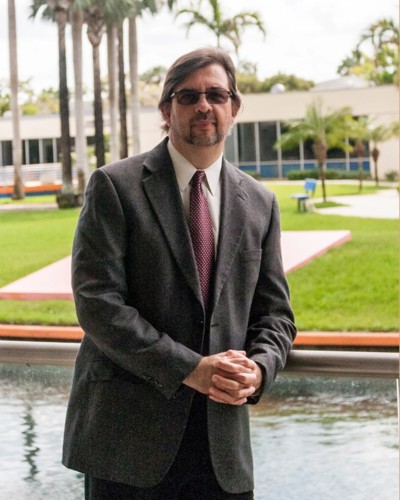
Dr. Richard Yaklich, currently serves as music director and president of the Broward Pops Orchestra and director of orchestras at Michael Krop High School Magnet Star Academy. He served 22 years as a professor of music in the Miami area, and is the former conductor of the South Florida Youth Symphony and of the Jubilate Chamber Orchestra. He also served as associate conductor of the Kingsport Symphony and music director of the Kingsport Youth Symphony.
He has conducted orchestras throughout the United States and Eastern Europe, including the Maikop Philharmonic and the Sochi Symphony Orchestra in Russia. Dr. Yaklich has conducted the Alhambra Orchestra of Miami on several occasions. Dr. Yaklich is also a certified orchestra adjudicator for the Florida Orchestra Association and has adjudicated orchestra festivals throughout Florida, including serving as conductor for the Broward All County Silver Honors Orchestra, presenting conducting workshops for Miami-Dade County school orchestra directors, and as the Florda Orchestra Association District Chair for Miami-Dade County.
Additionally, he is a published author, having written three books, one on orchestra repertoire and programming titled An Orchestra Conductor’s Guide to Repertoire and Programming and two on Eugene Ormandy: The Orchestra Scores of Eugene Ormandy – Creating the Philadelphia Sound and Rachmaninoff Symphony No. 1 – The Eugene Ormandy Preforming Edition – an Annotated Reconstruction. He is currently working on a biography about Eugene Ormandy.
He attended the Tanglewood Music Center and studied conducting with such musical notables as Gustav Meier, Charles Dutoit, Leon Fleisher, Maurice Abravanel and Seiji Ozawa. While studying at the Conductor’s Institute, he had master classes with Donald Portnoy, Samuel Jones, Larry Newland and Paul Vermal. He also studied with David Effron and Yuri Bekker at the Miami Music Festival.
In addition to his conducting activities, he is an active cellist and composer and has had works performed by the Colorado Symphony and in Romania. He maintains an active conducting and teaching schedule in South Florida.
Donations help the Arsht transform lives by connecting our community to the arts. Make a gift today at ArshtCenter.org/Gift.
Postshow Survey
Your feedback is important to us. Please complete a brief survey about your recent Arsht experience.
Presenting Sponsor

Supporting Sponsors




Institutional Sponsors


Adrienne Arsht Center
Inspirational Bon Mot Series by Adrienne Arsht